Clero started with a problem Ahmad watched happen in real time: the phone ringing while the front desk was already full. Receptionists were not ignoring patients. They were choosing between the person in front of them and the person on the line. We built Clero-an AI receptionist for dental practices-so those calls could still be answered calmly, with clinic rules respected and context left for the human team.
The sentence that started it
A few years ago, Ahmad was working as a dental receptionist when he heard a line that stuck:
“Ahmad, don’t pick up the phone. We don’t have time.”
It was not that the clinic did not care. The system around the desk was overloaded. Patients were arriving. Clinicians needed support. Admin was stacking up. The phone kept ringing in the background.
That is the moment a practice starts leaking trust and demand. The caller might be in pain. They might be ready to book a private consultation. They might be trying to rearrange before a DNA. Most people do not wait politely on voicemail. They call the next practice.
That moment is the seed of Clero.
Why dental - not “healthcare in general”
For dental clinics, the phone is access, diary fill, emergency handling, recall recovery and reputation in one channel. We stayed narrow on purpose. Emergency pain calls feel different from fee questions. Failed-filling follow-ups feel different from a simple rebook. Private treatment enquiries cool quickly if nobody answers.
Early on there were chances to widen into other healthcare verticals. We chose depth in dentistry instead. Generic voice tools miss the workflows practice managers actually argue about. That focus still shapes how we design rules, escalations and booking behaviour-see also our implementation guide.
Ahmad’s path into the problem
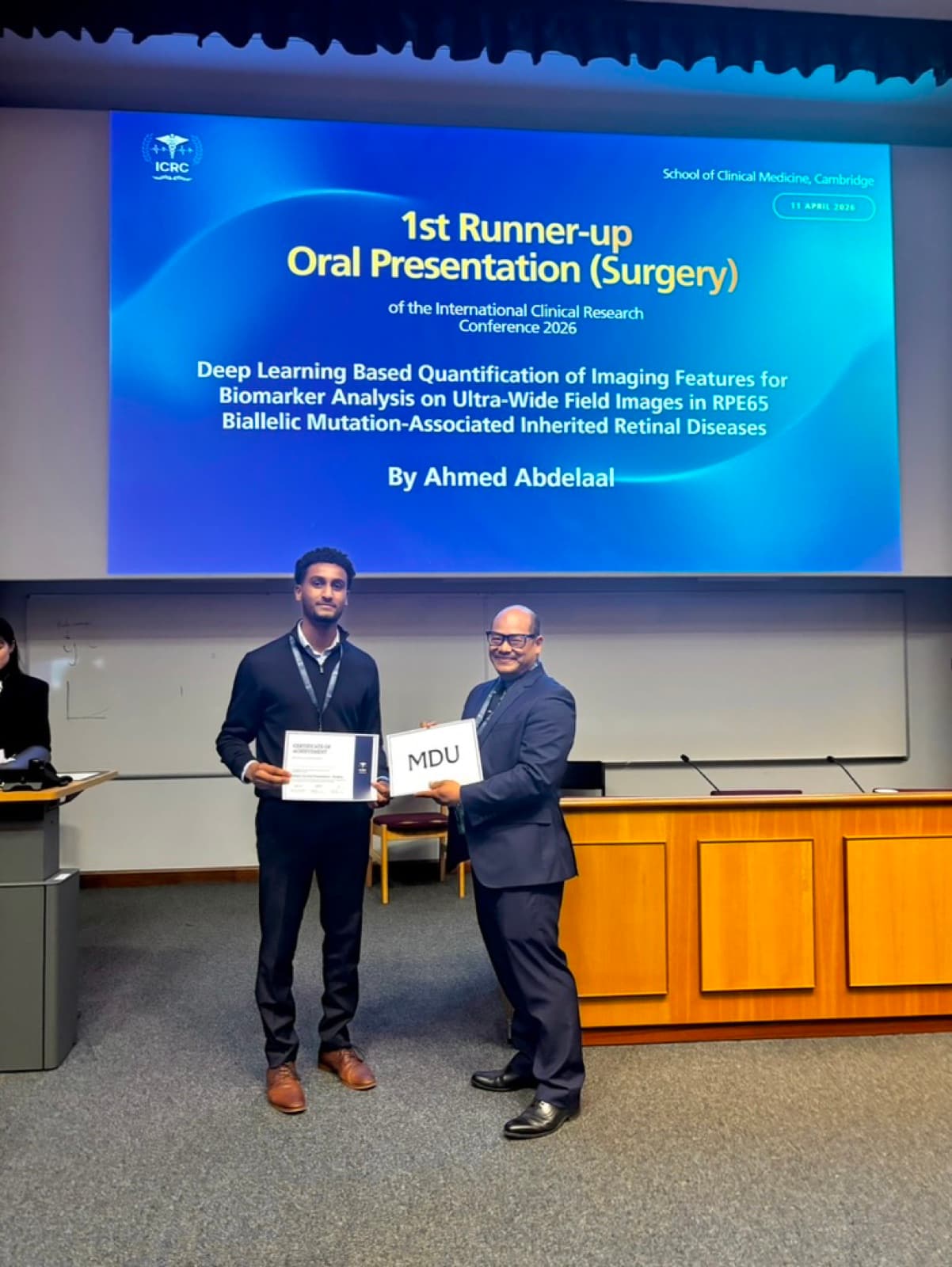
Ahmad’s background mixes frontline dental reception, medicine at UCL, and medical AI research. He has worked behind busy dental desks and as an AI research assistant at Moorfields Eye Hospital, including dissertation work with Eye2Gene and the Pontikos Lab on machine learning for inherited retinal disease detection in Optos ultra-widefield imaging.
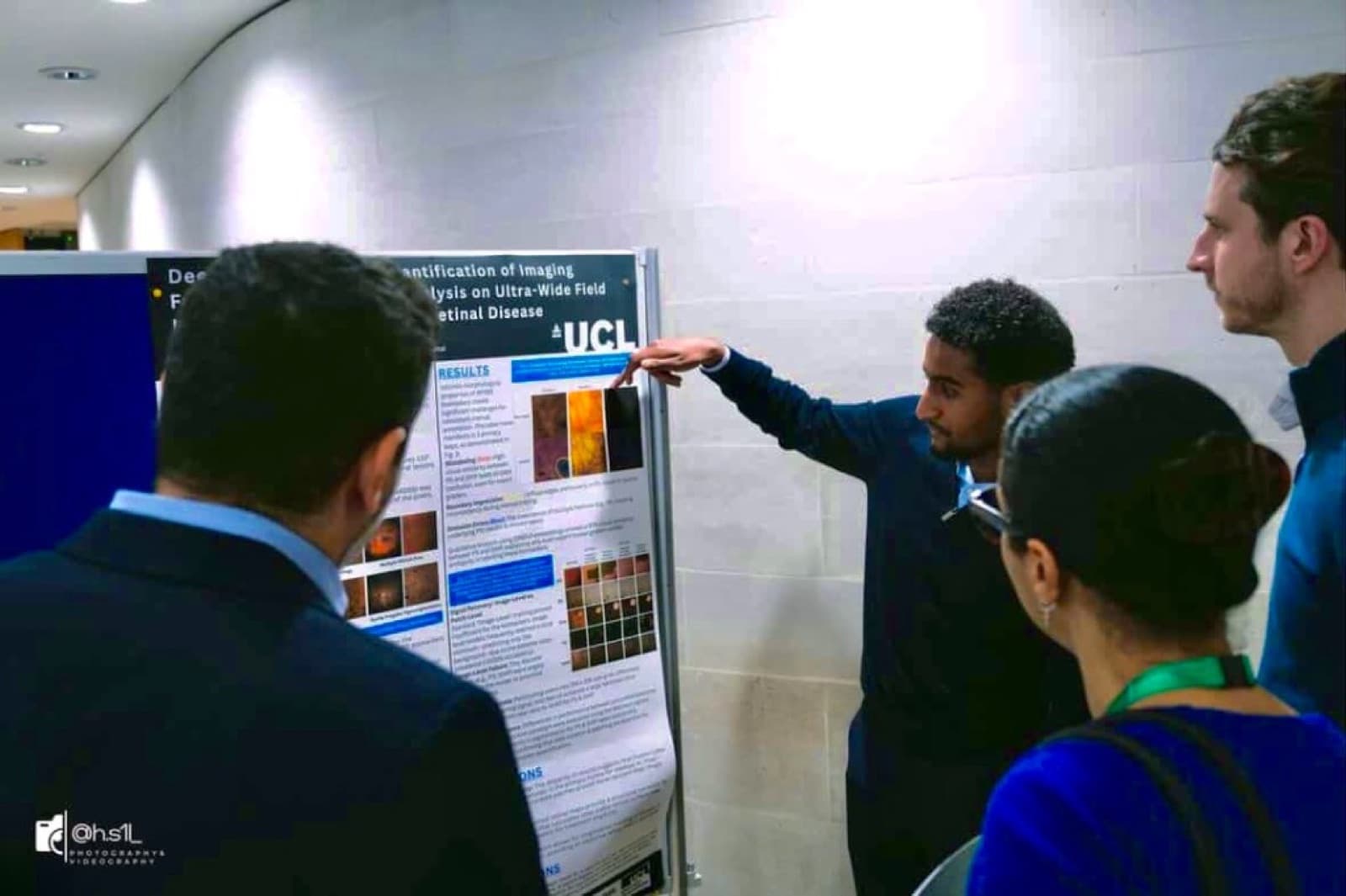
That research is about finding small, easy-to-miss signals in noisy images. Building Clero felt related: the important dental call is often buried in operational noise-one unanswered ring, one treatment enquiry, one patient who needed reassurance.
Clinics are not buying novelty. They are trusting software to speak to anxious patients. Healthcare seriousness matters.
Hashir’s path into the build
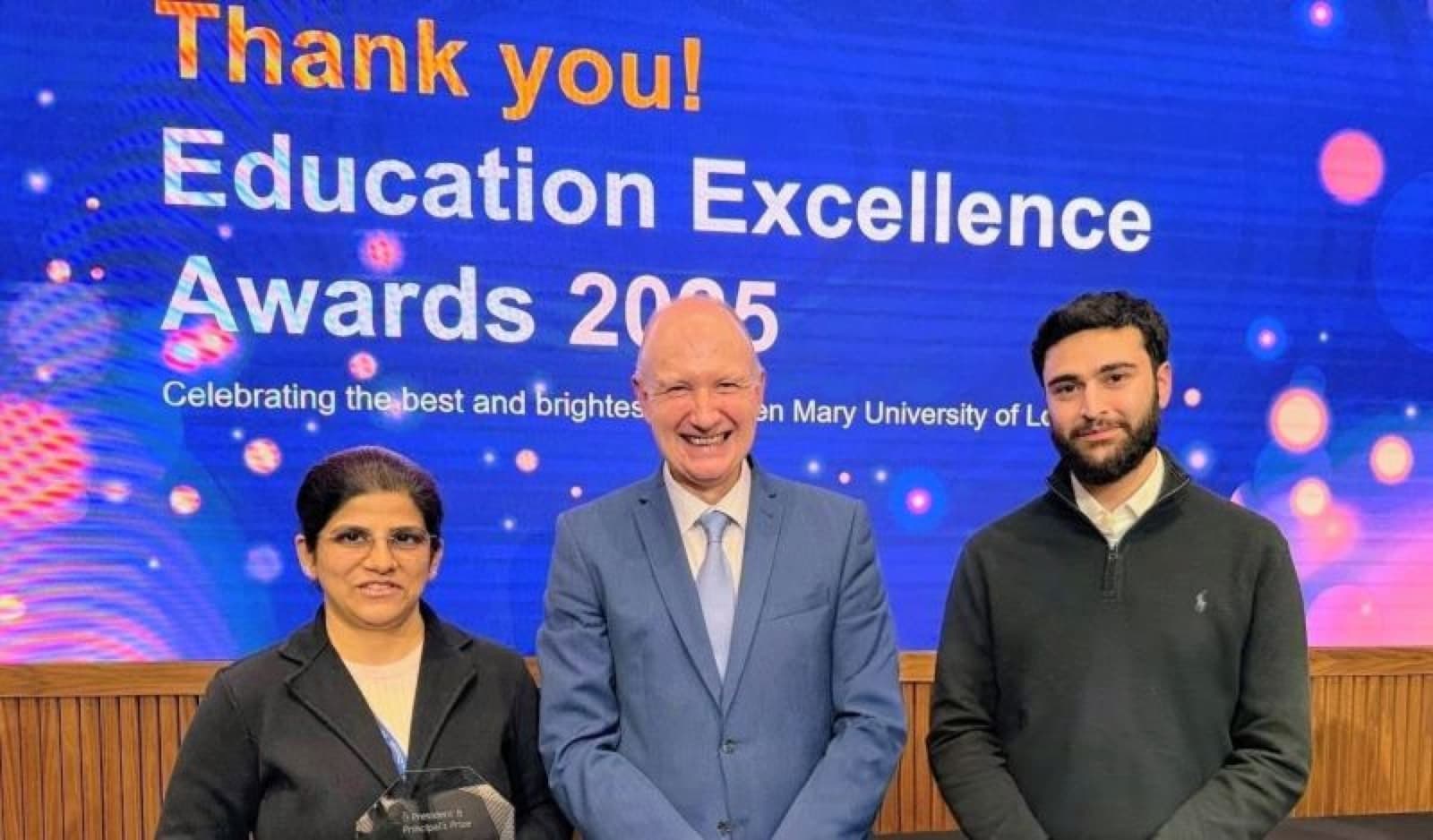
Hashir brings the systems side. He studies Computer Science and Artificial Intelligence at Queen Mary University of London and has worked across software engineering, education AI and medical robotics, including research with Advanced Robotics at Queen Mary.
One project involved a soft, pneumatically tuneable, vision-based force-sensing probe designed to estimate force from surface deformation-work presented at the British Conference of Undergraduate Research 2026 and accepted for IEEE RoboSoft 2026 in Kanazawa, Japan.
Patients do not speak in scripts. Clinics have different appointment types, hours and practice systems. An AI receptionist has to interpret intent, respect rules, fail safely and fit existing workflows without creating more admin. That is the engineering standard we hold ourselves to.
From observation to a working product
We started with a clear problem: unanswered calls when clinics are stretched. The first layer was AI voice handling-answer when the team cannot, qualify enquiries, support bookings, work out of hours. The longer goal is simpler access: fewer patients losing care because a receptionist was already helping someone else.
Along the way we listened more than we pitched.
At BDIA Dental Showcase, we showed up with a small stand and a young team. Over two days we spoke with clinic CEOs, principal dentists, practice managers and partners. The missed-call problem was already familiar to them-the morning rush, out-of-hours abandonment, the patient who books elsewhere after voicemail.
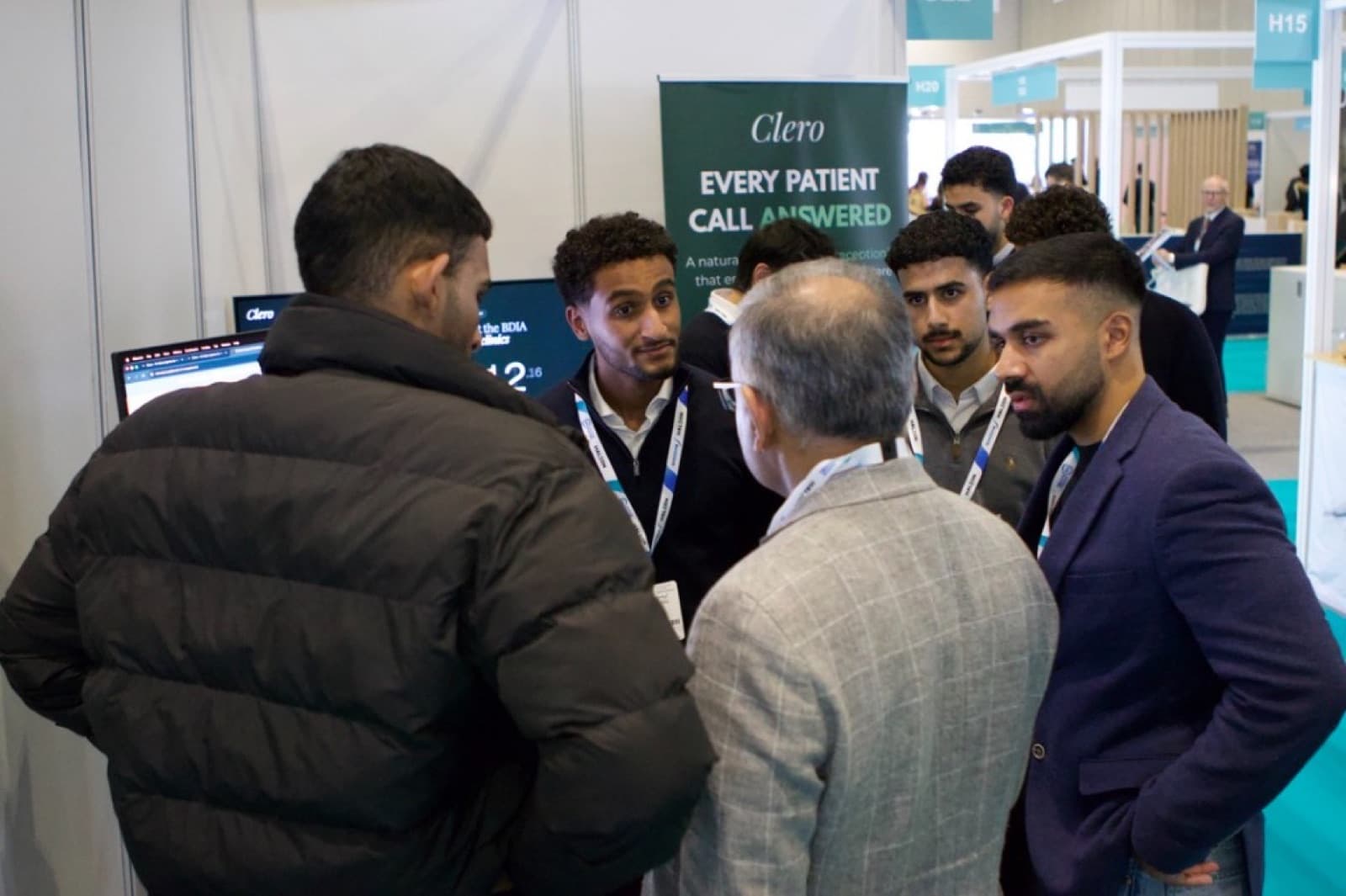
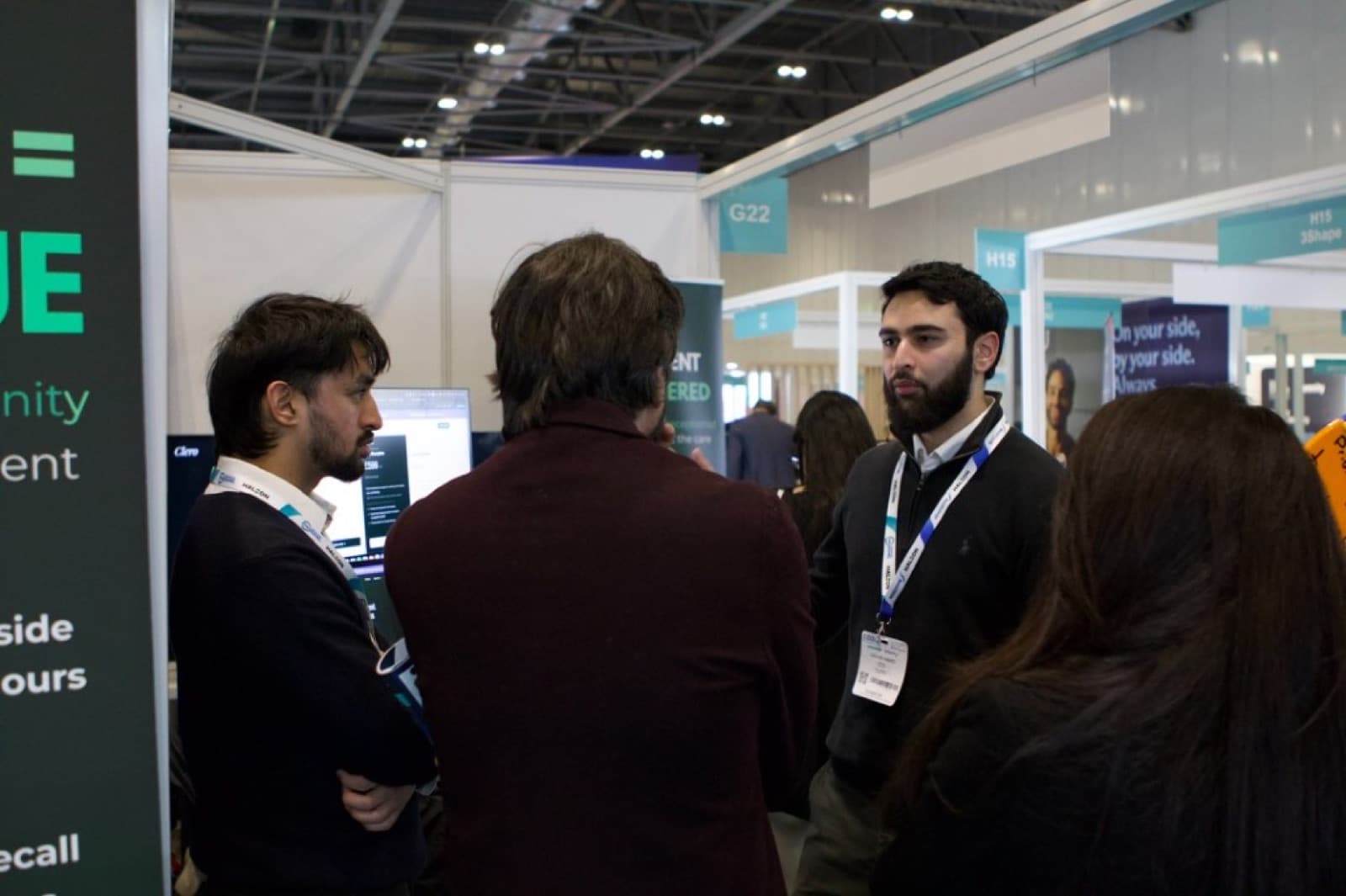
After enough real conversations, the pitch stopped sounding like a pitch. It became a direct response to what clinics were already describing: front-desk pressure, new-patient capture, out-of-hours access, chair utilisation, private enquiry speed, and making sure urgent callers are heard.
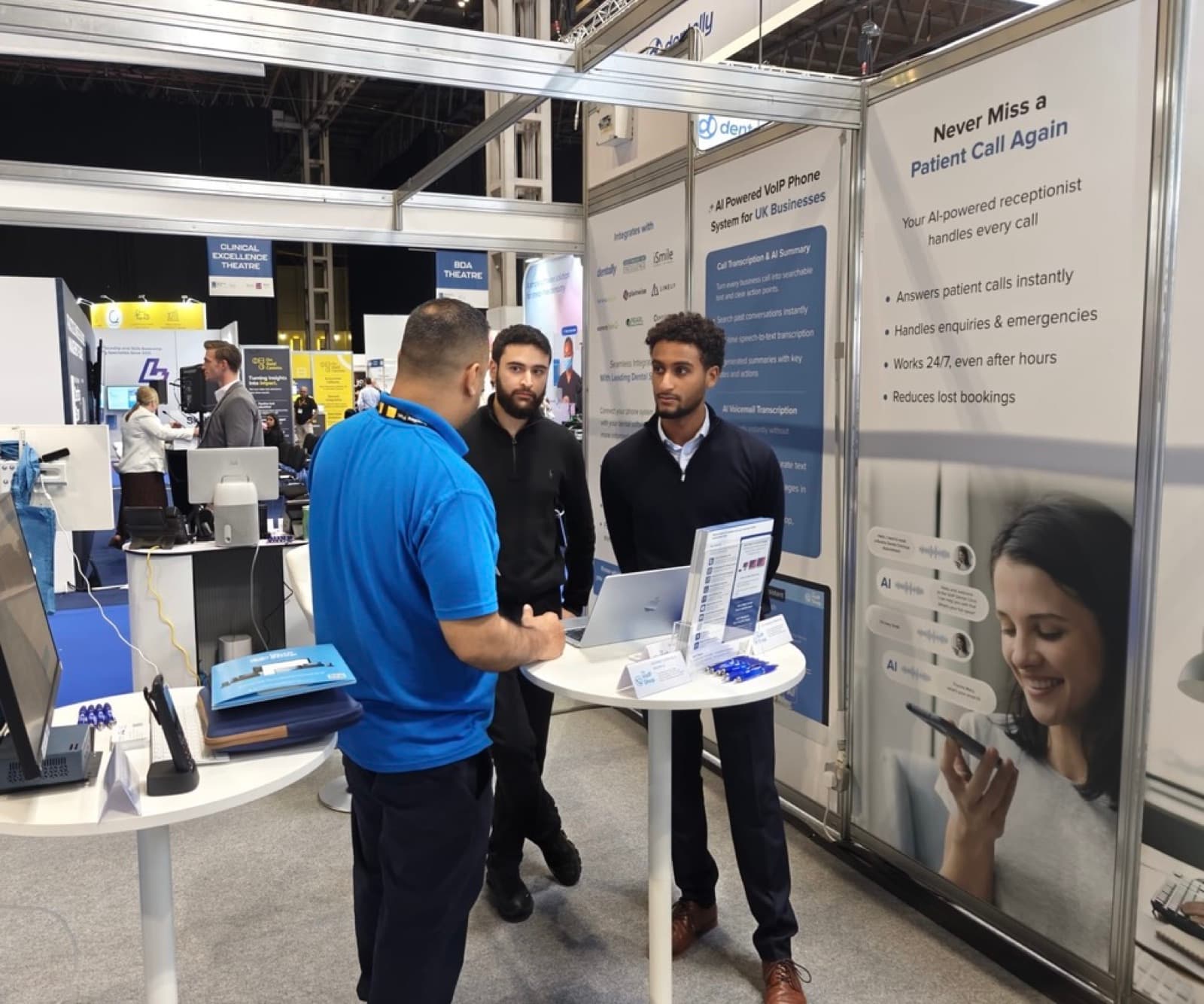
We took the same conversations to the British Dental Conference & Dentistry Show (BDCDS) at the NEC Birmingham (15-16 May 2026), exhibiting with The VoIP Shop. Phone infrastructure and AI are related but separate decisions-routing and connectivity matter as much as conversation quality. First-hand notes from that show are in our BDCDS 2026 recap.
Milestones that kept us honest
Recognition helped, but clinics using the product matter more.
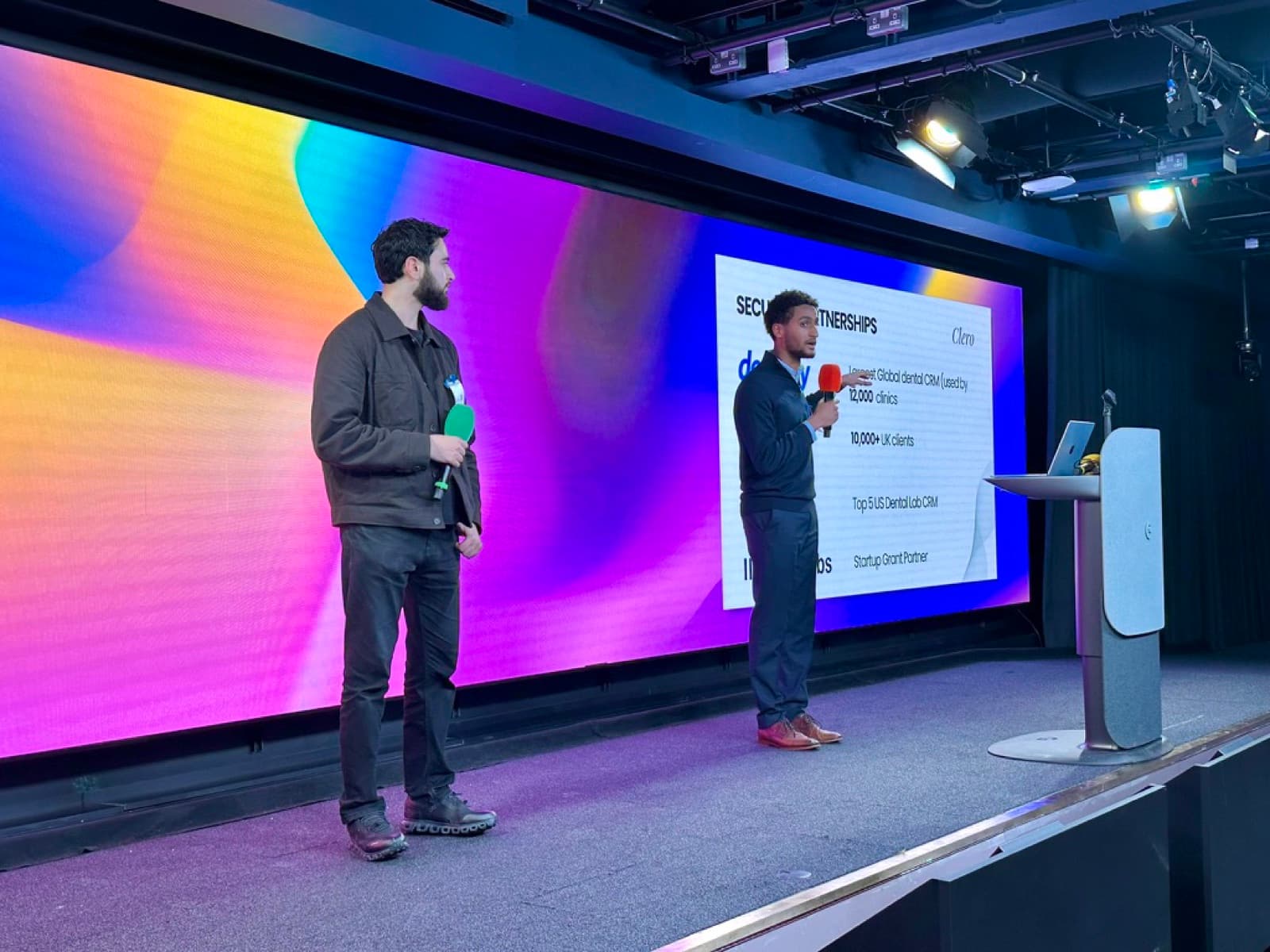
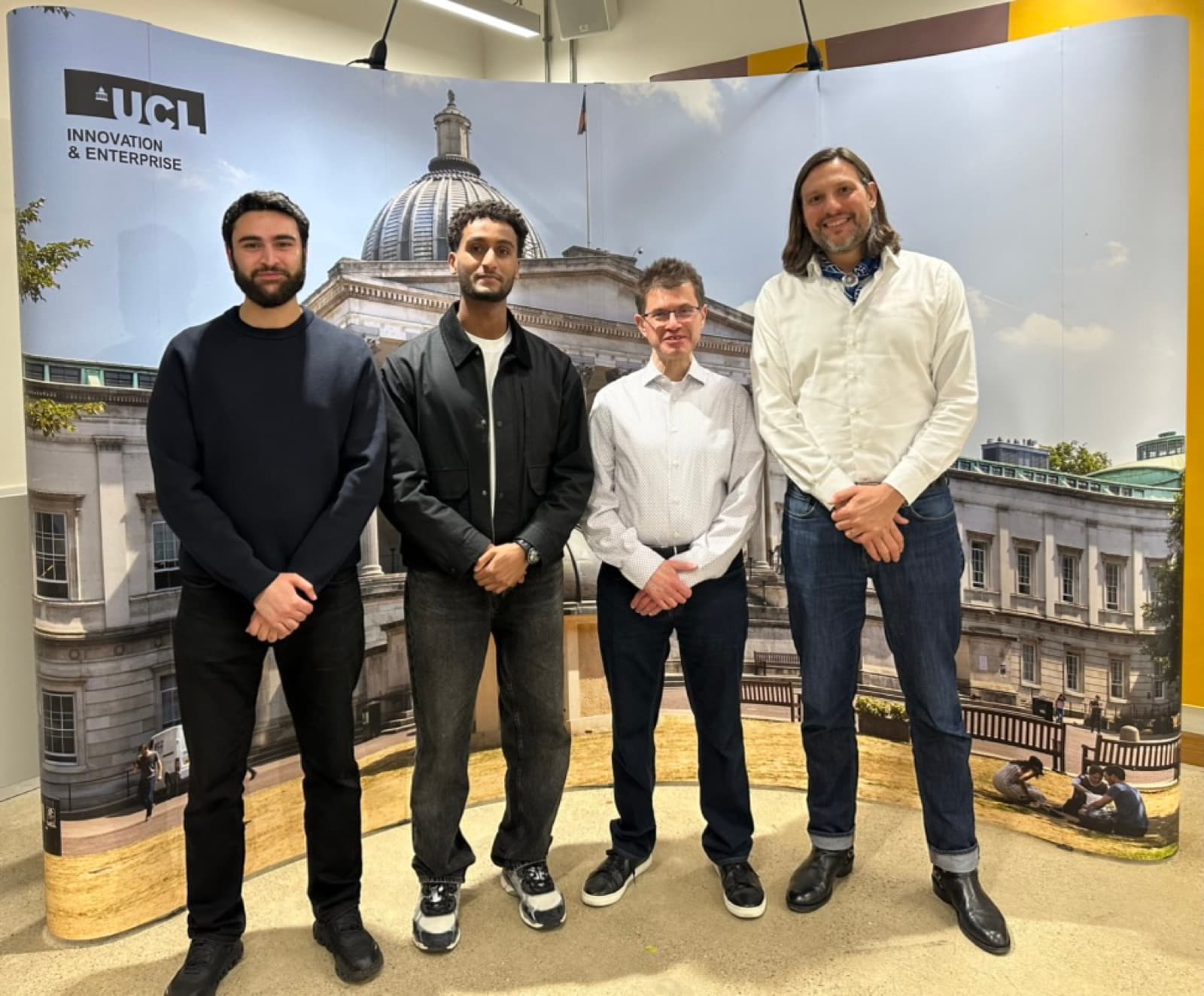
- UCL Innovation & Enterprise Venture Builder - out of 140 teams, 24 pitched; Clero was among the winning teams.
- Queen Mary Business Society pitch competition - Hashir pitched Clero; we placed 2nd.
- Early community programmes such as Deen Developers and Collective Continuum Buildathons Batch 4.
- Exhibition floors at BDIA and BDCDS, shaped by practice-owner conversations rather than slide decks alone.
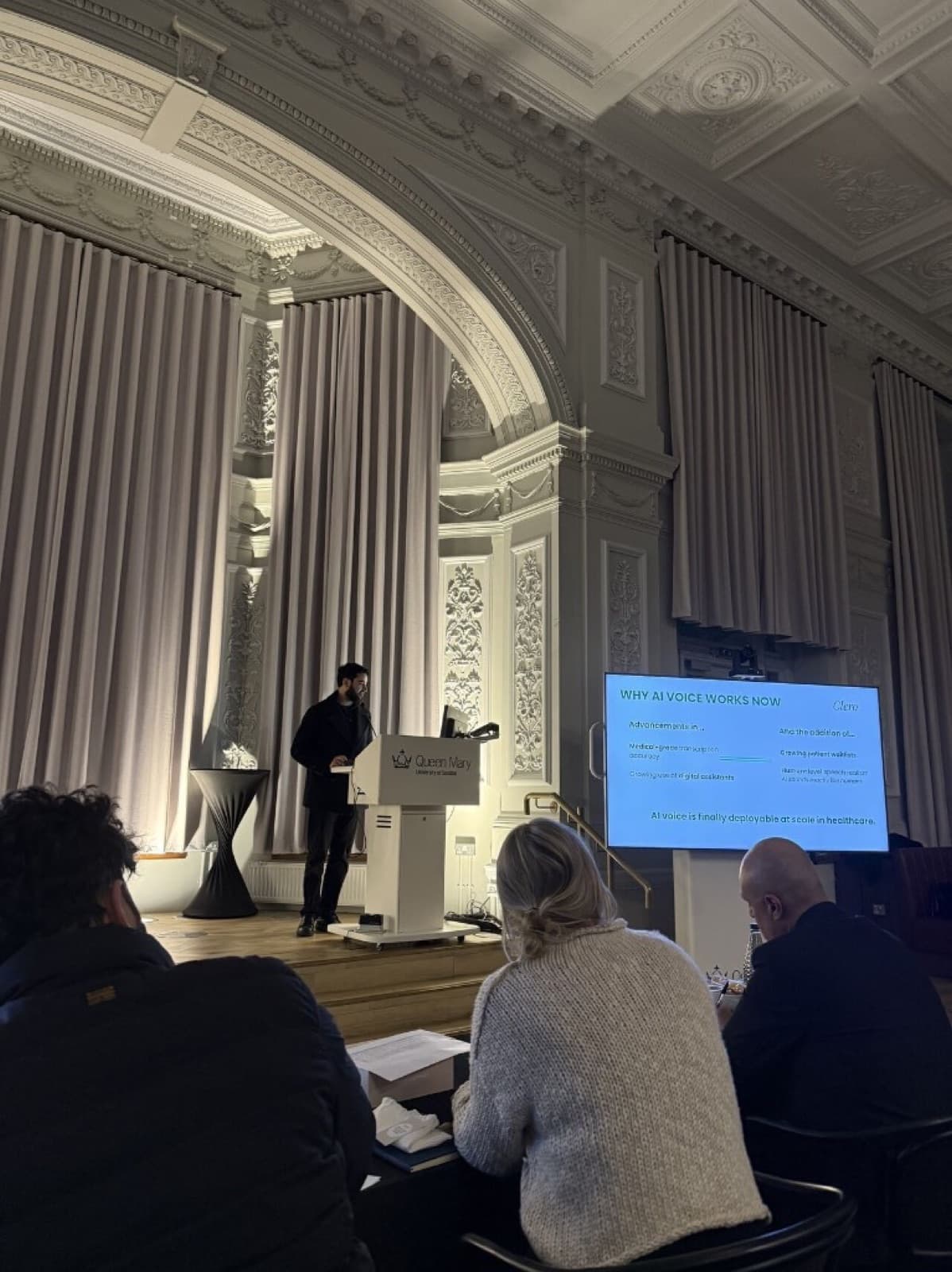
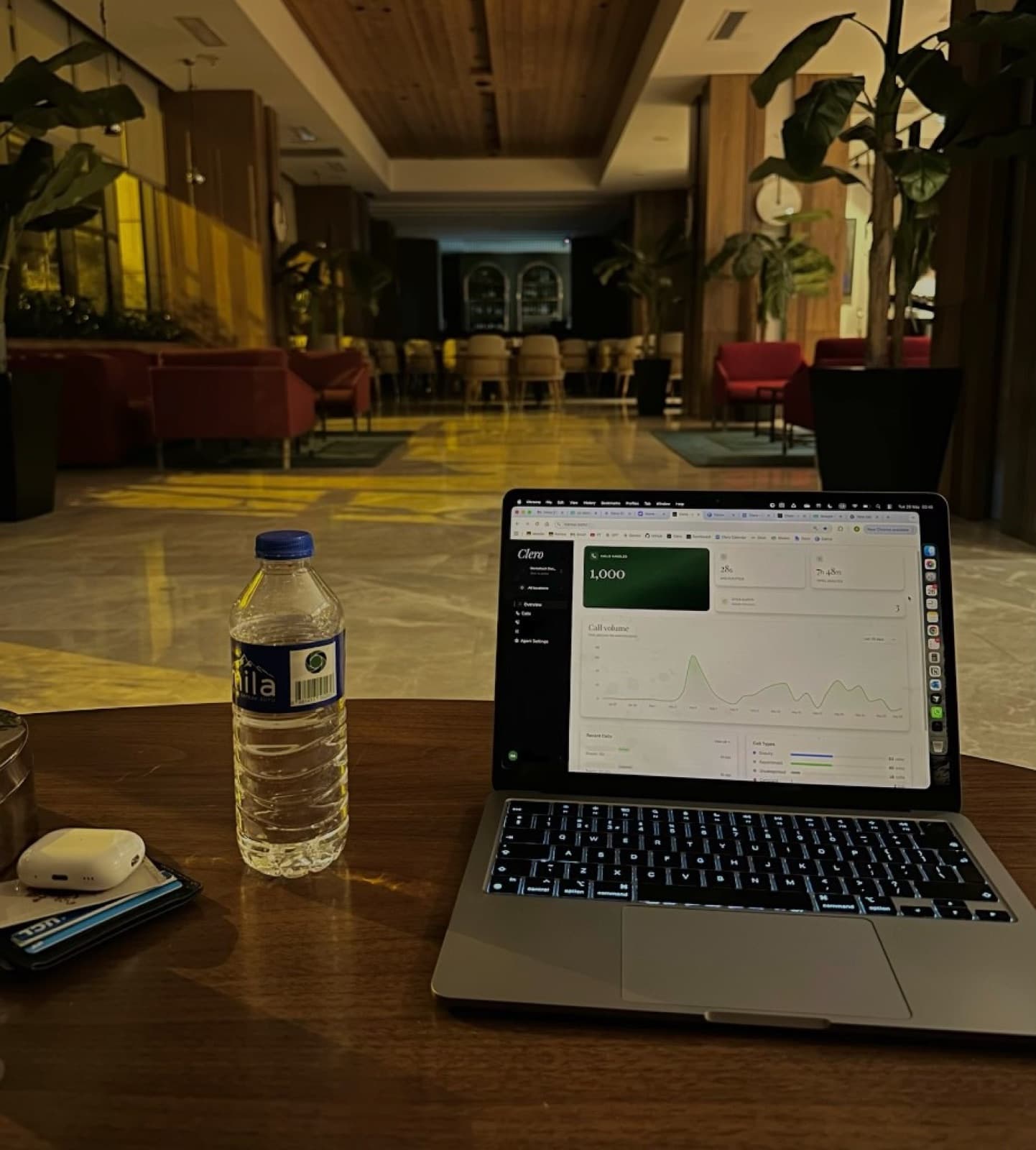
On usage: we crossed 1,000+ calls handled for one large clinic partner-visible on our own dashboard milestone. That partner also reported a strong return relative to their subscription. We share that as their feedback from live use, not as a universal benchmark for every practice.
What stuck with us from the front desk was simpler than a metric: receptionists who were not leaving every shift completely drained because repetitive confirmations and out-of-hours booking pressure had somewhere else to go-while people still owned the conversations that need a human.
Design principles we refuse to drop
- Answer when the desk cannot - overflow and out-of-hours without pretending we replace hospitality.
- Respect clinic rules - appointment types, hours, deposits, escalations.
- Fail safe on urgency - no clinical advice; safety scripts and transfer when needed.
- Write to the diary only when we can - supported PMS connectors today include Dentally, CareStack, Semble, Aerona and Exact; anything else is scoped honestly.
- Leave context for humans - so staff are not reconstructing a call from nothing.
Clero is not a traditional answering service that only takes messages. It is also not a licence to remove the human side of a clinic. It exists to protect that human side.
Author box
Ahmad Abdelaal - Co-Founder & CEO. Dental reception experience; medicine at UCL; medical AI research including work connected to Moorfields / Eye2Gene imaging research.
Hashir Hamid - Co-Founder. Computer Science & AI at Queen Mary University of London; software engineering and medical robotics research.
Company updates: Clero on LinkedIn.
What we are still building towards
We started with one observation: when phones are missed, patients and clinics both lose. The mission is still focused-build the AI communication layer dental practices can trust, starting with unanswered calls-then deepen integrations and workflows with the teams who use them.
Every patient should be heard. Every clinic should capture demand. Every reception team should have room to breathe.
That is why we built Clero.
If you run a dental practice and this sounds familiar-missed calls, front-desk overload, out-of-hours demand-we would rather talk than pitch. Reach out and tell us how your phones actually work on a busy morning. We will listen first.